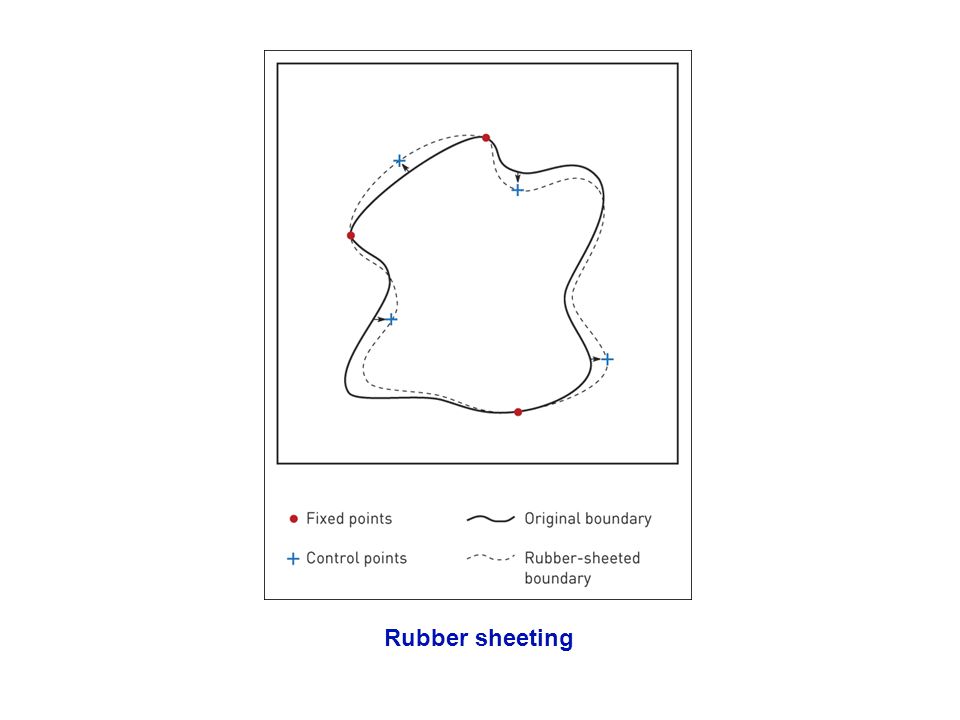
Rubber sheeting is a useful technique in historical gis where it is used to digitize and add old maps as feature layers in a modern gis.
Rubber sheet gis.
Rubber sheeting is commonly used after a transformation to further refine the alignment accuracy of the transformed features.
Rubbersheeting is used to make small geometric adjustments in your data usually to align features with more accurate information.
Rubber sheeting may improve the value of such sources and make them easier to compare to modern maps.
Conveyor belts lacing.
Rubbersheeting is used to make small geometric adjustments in your data usually to align features with more accurate information.
In rubbersheeting adjustments you are usually trying to align one layer with another that is often in close proximity.
On the edit tab in the snapping group enable your snapping preferences.
For steps to transform features using affine or similarity transformation methods see transform features.
Rubbersheeting is used to make small geometric adjustments in your data usually to align features with more accurate information.
In rubbersheeting adjustments you are usually trying to align one layer with another that is often in close proximity.
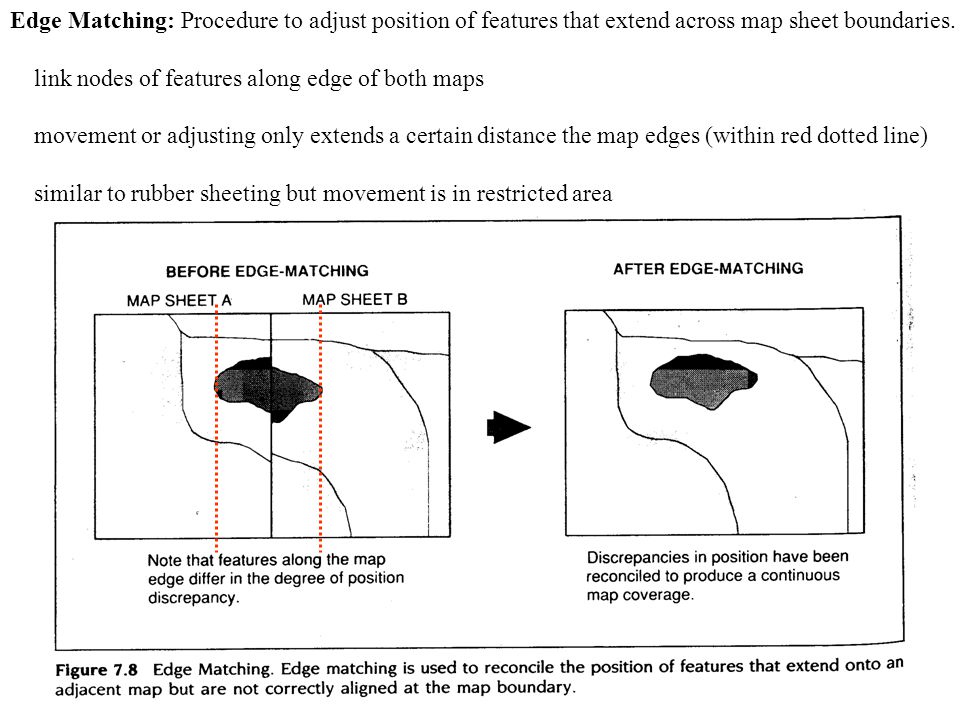
Random geometric errors are corrected through a process known as rubber sheeting.
Rubber sheeting registration by relative position is the procedure using slave and master mathematical transformations to adjust coverage features in a nonuniform manner.
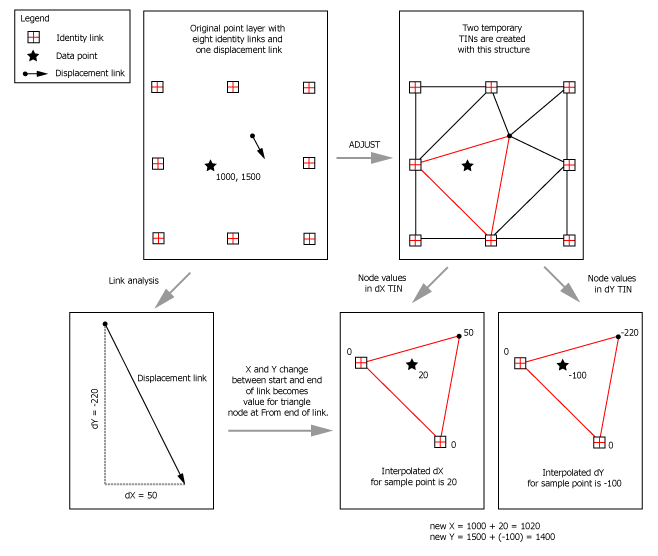
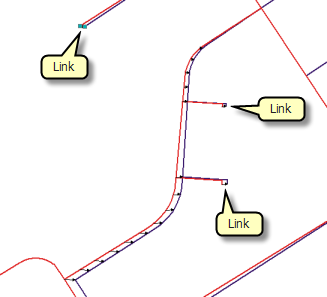
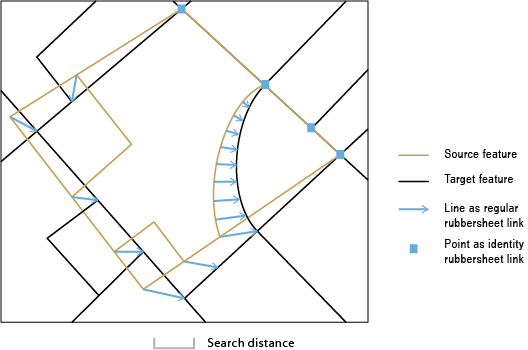
Use displacement links to define common locations in the source and target layers.
Links representing from and to locations are used to define.
Before aerial photography arrived most maps were highly inaccurate by modern standards.
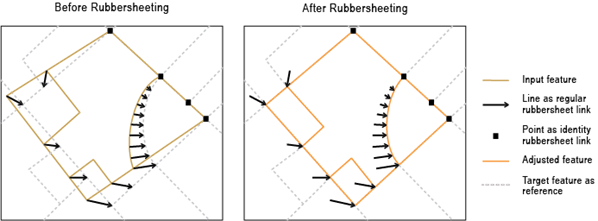
The input link features represent the regular links.
Rubbersheeting makes spatial adjustments to align the input feature locations with more accurate target feature locations based on the specified rubbersheet links.
The source layer drawn with solid lines is adjusted to the more accurate target layer.
Features may move depending on their proximity to and length of displacement links.
The source layer drawn with solid lines is adjusted to the more accurate target layer.
Rubbersheeting is typically used to align two or more layers.
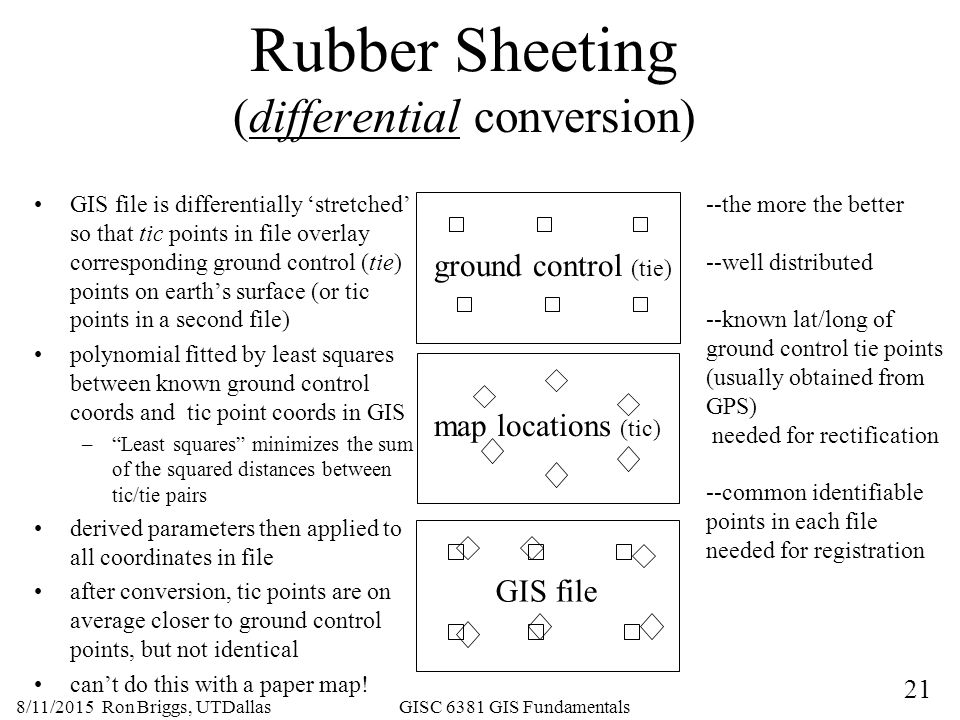
As the name implies rubber sheeting involves stretching and warping an image to georegister control points shown in the image to known control point locations on the ground.
The input point features represent identity links that hold source positions unmoved during the rubbersheeting process.
This process moves the features of a layer using a piecewise transformation that preserves straight lines.