I am looking for a simple rubber sheeting algorithm to rectify images.
Rubber sheeting algorithm.
The proposed system then evolved and achieved better performance in time.
The purpose is to develop a simple tool to automatically rectify a large number of images using four corner coordinates known.
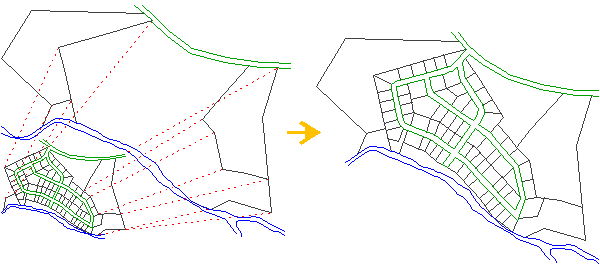
Rubber sheeting preserves the interconnectivity between points and objects through stretching shrinking or reorienting their interconnecting lines.
By the way the piecewise nonlinear rubber sheeting algorithm has been suggested by akima 1970 and akima 1978.
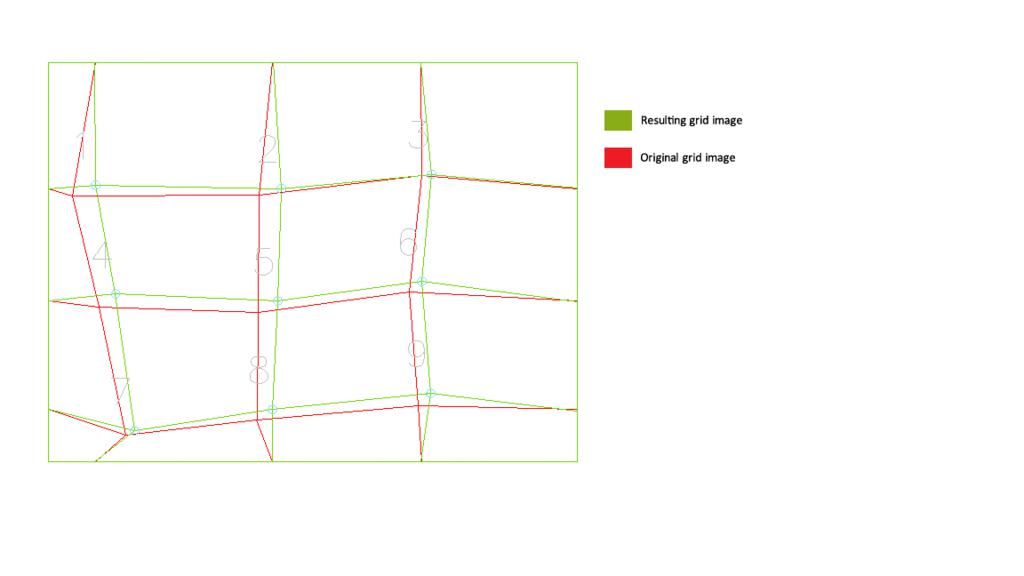
Corrects randomly deformed maps with reference to new maps provided with a grid of control points.
After a few years of scientific experiments daugman proposed and developed a high confidence iris recognition system and published the results in 1993 7.
The algorithm has four stages and resembles the spreading of soap bubbles limited by a polygonal ring changing its shape and size.
The rubber sheeting process is defined by a linear spreading of the random corrections given at each point on the map perimeter.
The sources of data are vectorized maps from adjacent scanned sheets not necessarily of the same scale or with the same accuracy which will be part of a future geographical information system gis database.
Fig 1 daugman s rubber sheet model shows how a circular shape iris can be.
In order to eliminate these discrepancies and define a continuous database the popular practice is to.
For this reason epdm material is an excellent medium for outdoor uses.
Inherent errors in the conversion process from maps to digital information cause variations in the location of common boundary lines between adjacent maps.
For the geometric adaptation rubber sheeting algorithms have been proposed where in the simple case a vector field is calculated from some given object correspondences doytsher 2000.
A procedure for adjusting the coordinates of all the data points in a dataset to allow a more accurate match between known locations and a few data points within the dataset.
A rubber sheeting algorithm for non rectangular maps1 doytsher yerahmiel.
It achieves an ideal balance to create an all purpose weather resistant rubber.
Instead of the affine transformation this method employs the fifth order polynomial transformation with conditions such as continuity and smoothness of adjacent piecewise transformations.
A raster map file gives you the capability to adopt some sophisticated mathematical algorithms transformations which allow you to reach a precision up to 10 times more accurate than a manual inspection.