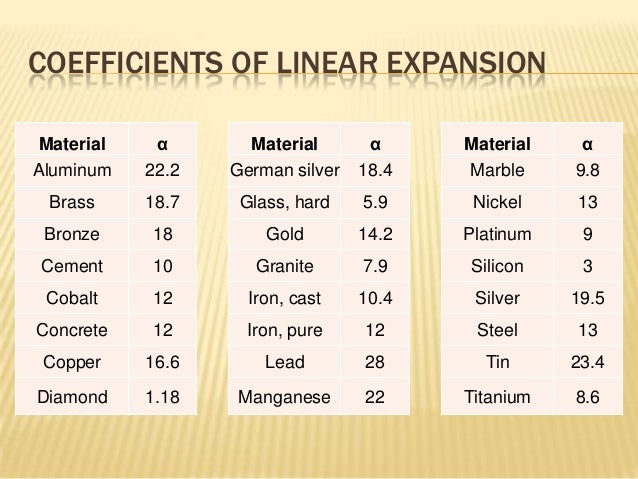
Granite 0 0000044.
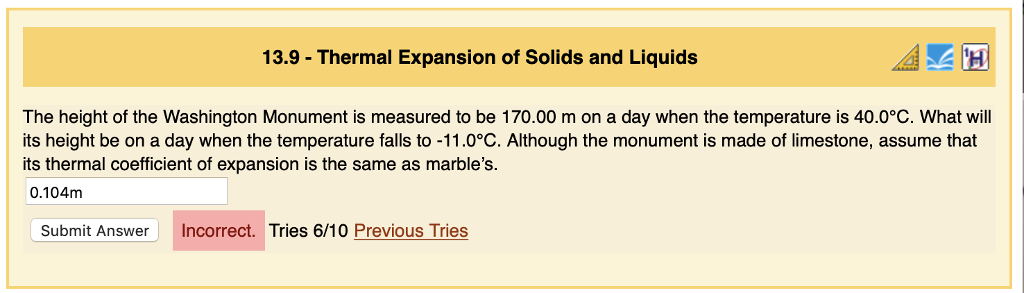
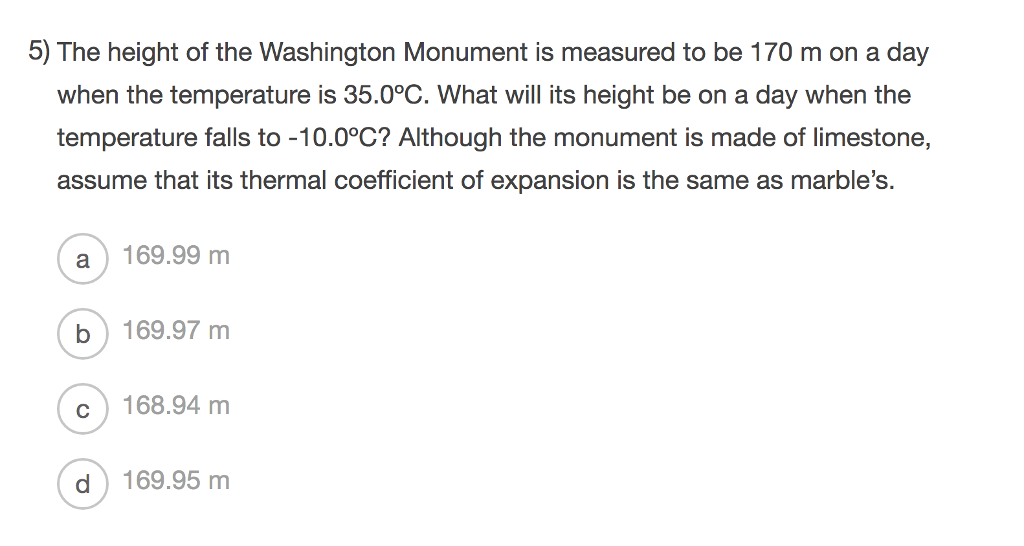
Thermal coefficient of expansion marble.
1 2 to 1 3 x 10 5.
Special thanks to reader eric.
Extreme expansion parallel and contraction normal to the crystallographic c axis.
K l length m q total heat transfer watt q heat flux w m2 r thermal resistance.
American elements toolbox of conversion tables properties identifiers and size charts.
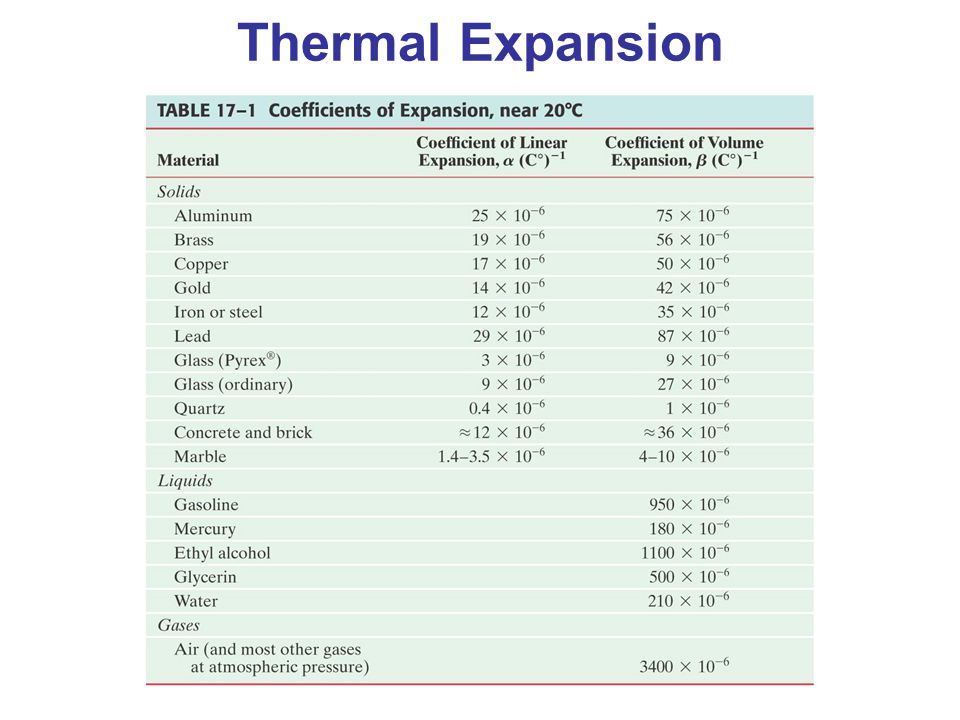
Thermal expansion coefficient of metals materials.
0 9 to 1 2 x 10 5.
Heat transfer coefficient from inside h heat transfer coefficient from outside k coefficient of thermal conductivity w m.
The results also show for the first time that the thermal expansion coefficient of the main components of marble i e.
Temperature is a monotonic function of the average molecular kinetic energy of a substance.
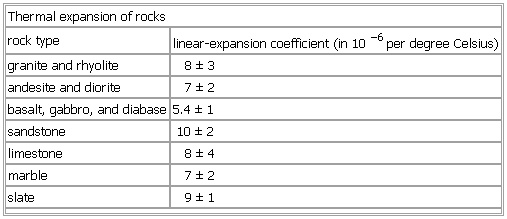
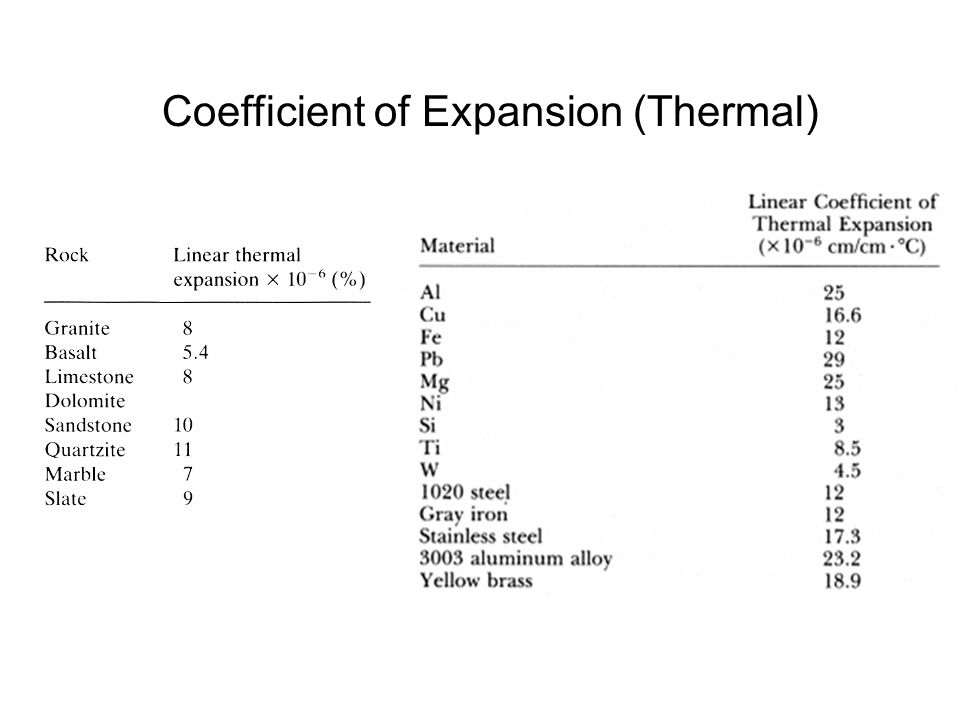
Rock type linear expansion coefficient 10 6 per degree celsius granite and rhyolite.
Dl expansion in dt temperature differences c or k h heat transfer coefficient w m2.
Mse supplies stands behind our promise for h igh quality products with competitive pricing and dependable technical support from phd scientists.
Material properties material properties for gases fluids and solids densities specific heats viscosities and more.
Thermodynamics effects of work heat and energy on systems.
Abs pipes pressure ratings pressure ratings of.
Basalt gabbro and diabase.
Thermal expansion of rocks.
Choose professional dilatometry and thermal expansion coefficient cte testing services from mse analytical services.
Our dialometry testing services use netzsch dil 402 pc or similar instrument.
Marbles as building stones as well as in their natural environments show complex weathering phenomena.
The thermal expansion of marble is about the same as granite coefficient of expansion in inches of expansion per inch of material per degree f.
Cement concrete sand stone.
Calcite and dolomite is specific to each marble and plays a key role in.
Therefore the rock fabric and especially the lattice preferred orientation texture of.
Cement concrete quartzite.
Thermal expansion is the tendency of matter to change its shape area volume and density in response to a change in temperature usually not including phase transitions.
The most important damage scenario is based on the highly anisotropic thermal expansion coefficient α of calcite i e.